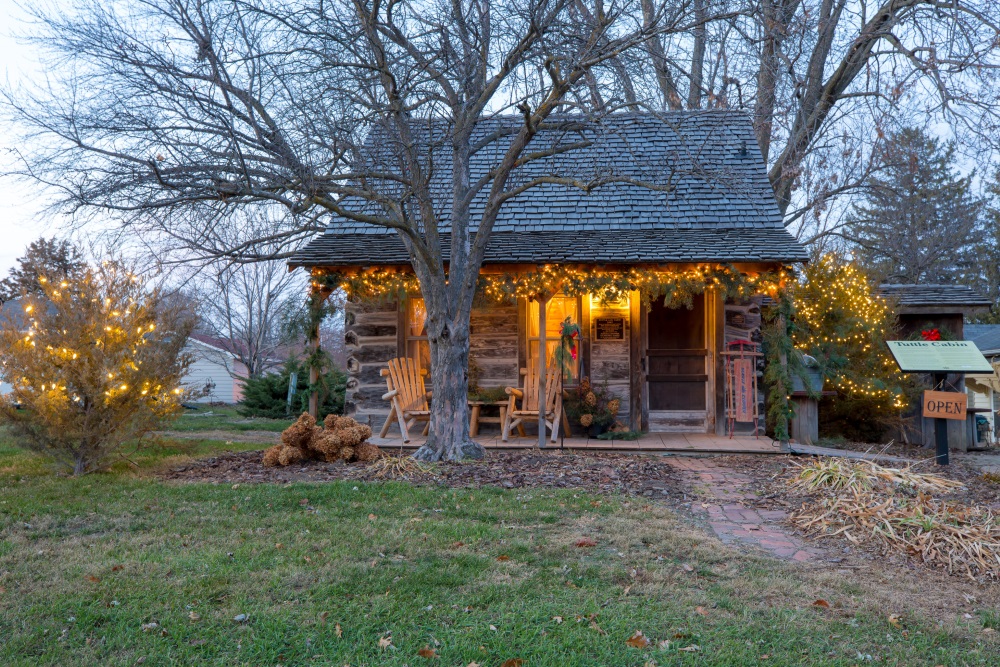
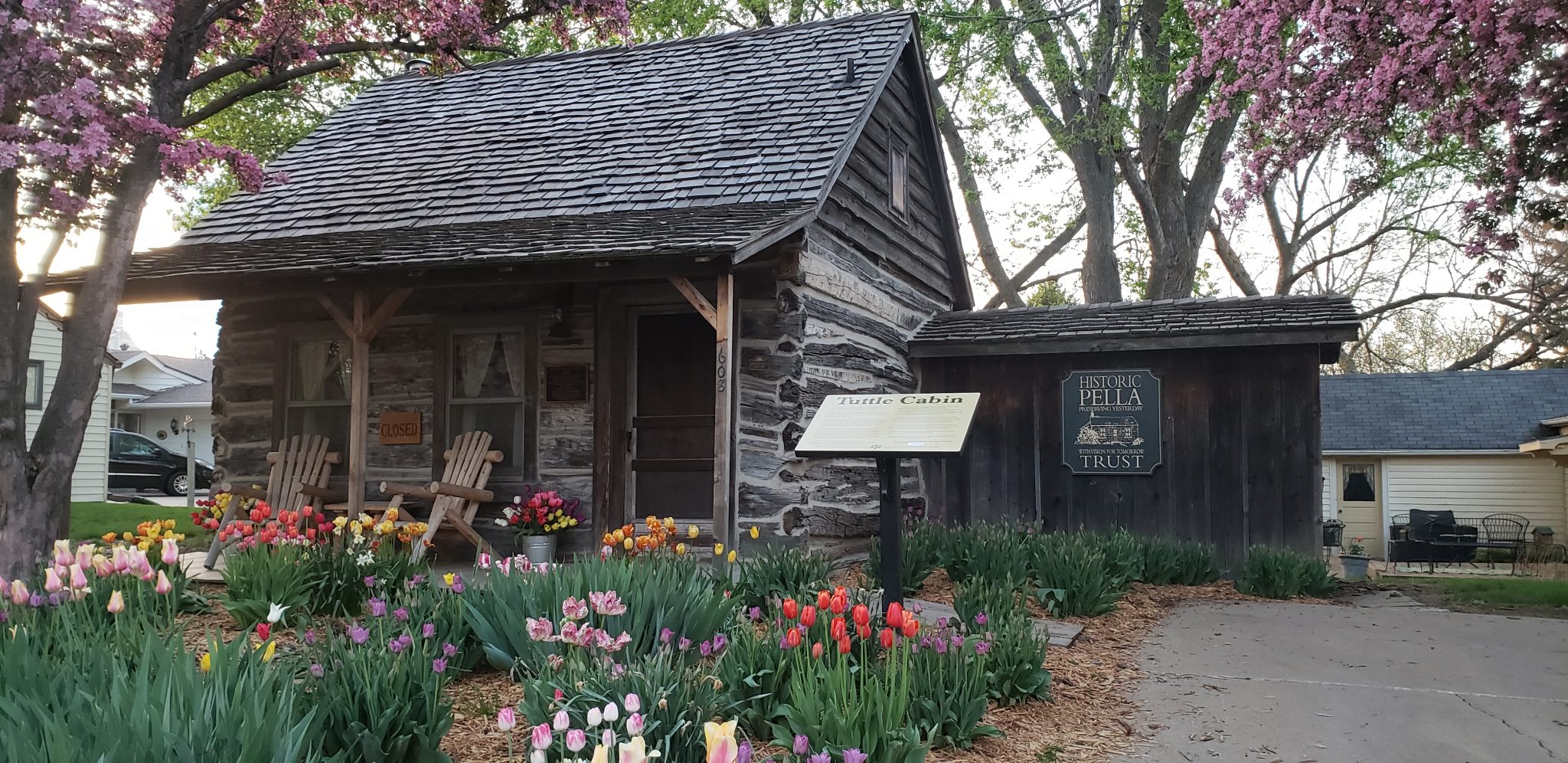
Tuttle Cabin — Honoring Pella’s First Pioneer Settlers The Tuttle Cabin is named for Thomas and Nancy Tuttle, the first pioneers to settle at what would later become the city of Pella. In 1842, the U.S. Government purchased eleven million acres of the Iowa Territory from the Sauk and Mesquakie Native American tribes. These tribes agreed to evacuate the eastern half of the session, marked by the “Red Rock” line, by May 1, 1843. The recently-wed Tuttles arrived here on Saturday, May 13, 1843, unaware of another settler within 20 miles. They decided to claim this land for their farmstead. The site lay along the “State Road,” a dirt route connecting Keokuk on the Mississippi River with the army outpost at Fort Des Moines. It stood about ten miles east of the western edge of the American frontier. Over the next few months, the couple staked out their land claim, broke the thick prairie sod, constructed shelter, and prepared to endure a lonely, harsh winter. When food ran low in midwinter, Thomas made an arduous nine-day solo journey for supplies. Nancy remained alone to guard the farm claim and tend the livestock. In 1844, the Tuttles planted and harvested their first crop. As other settlers arrived, the area was organized as Marion County in 1845. In 1846 Iowa became the 29th state admitted to the Union. In July 1847 itinerant Baptist minister and mail carrier Rev. Moses J. Post, led five Hollanders to visit the Tuttles. The group was led by Domini (Rev.) Hendrik Peter Scholte. This small Dutch committee represented 800 Hollanders then recuperating in St. Louis after an arduous immigration to America in search of economic, religious, and educational freedom. Scholte recognized that this area would make an excellent location for the Hollanders’ “City of Refuge.” Scholte negotiated the purchase of the Tuttles‘ farm and the committee quickly purchased additional land claims, livestock, farming implements, and crops from several other nearby pioneers. A month later, Scholte led the anxiously waiting band of Hollanders to their new Iowa home. One of Scholte’s first acts was to layout the center nine blocks of the city of Pella atop the Tuttle’s field. With the arrival of the Hollanders, the Tuttles resettled about twenty miles to the northeast, where they farmed for the next three decades. Constructed from native walnut timber cut from a nearby grove, the Tuttle Cabin is one of the oldest surviving buildings in Marion County. The cabin stands as a reminder of the courage, hardship, and hope that marked settlement on the Iowa frontier. It is preserved and maintained by the nonprofit Pella Preservation Trust.
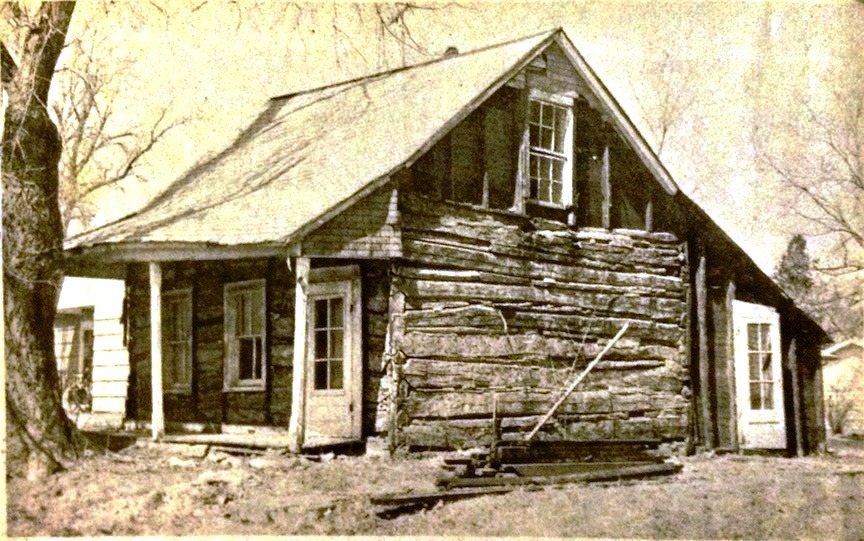
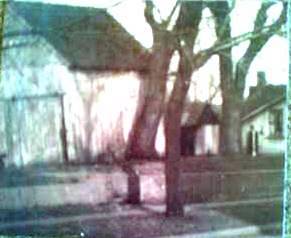
Below is the Tuttle Cabin as it appeared in 1973 before it was moved to the back of the lot onto a new basement. Its original location was close to the street and sidewalk. A large tree stood in front of the cabin, that tree witnessed the day HP Scholte knocked on the door interested in buying the homestead. Photo taken right after it was purchased from the Sneller estate auction. The VanVark Family bought it for their daughter, Gail VanVark Kirby. Gail lived in the cabin and later rented it out to several lucky people and eventually she had her paper art studio in the cabin.
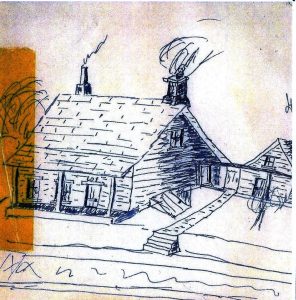
Tuttle Cabin in the 1930's
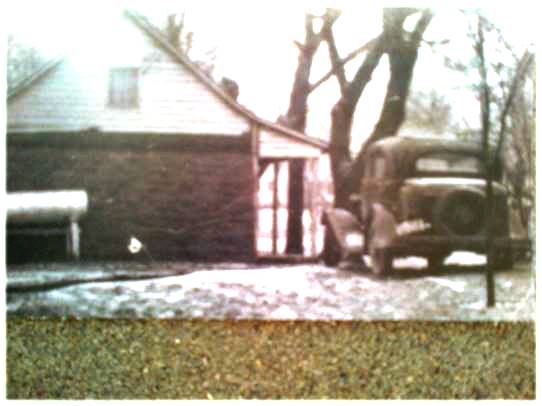
Tuttle Barn to the west 1930
May 2018
“The Tuttle Log House is to Pella what Plymouth Rock is to the Pilgrims”
William C. Page Public Historian and Preservation Planner
Heritage is an important addition to the quality of life for all of our citizens and visitors. It is through this Dutch charm that helps to attract people from all over the country. Visitors appreciate seeing the well cared for historical properties; enhancing our tourism industry.
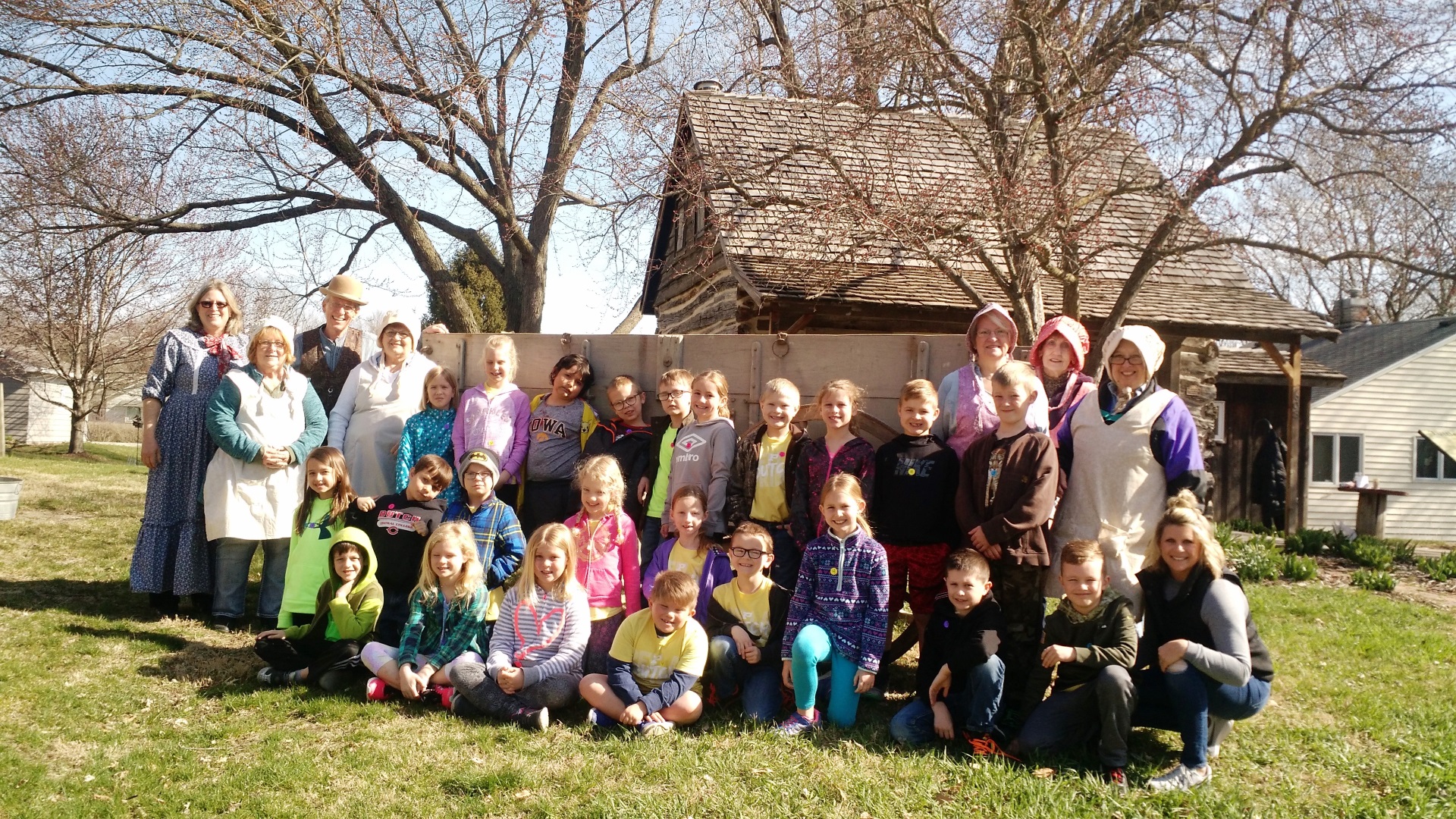
Tuttle Educational Program
Tuttle Cabin tours are available per appointment by emailing office@pellapreservationtrust.
We are open during Pella’s Tulip Time Festival and other community celebration days.
There will be featured open houses on our calendar throughout the year